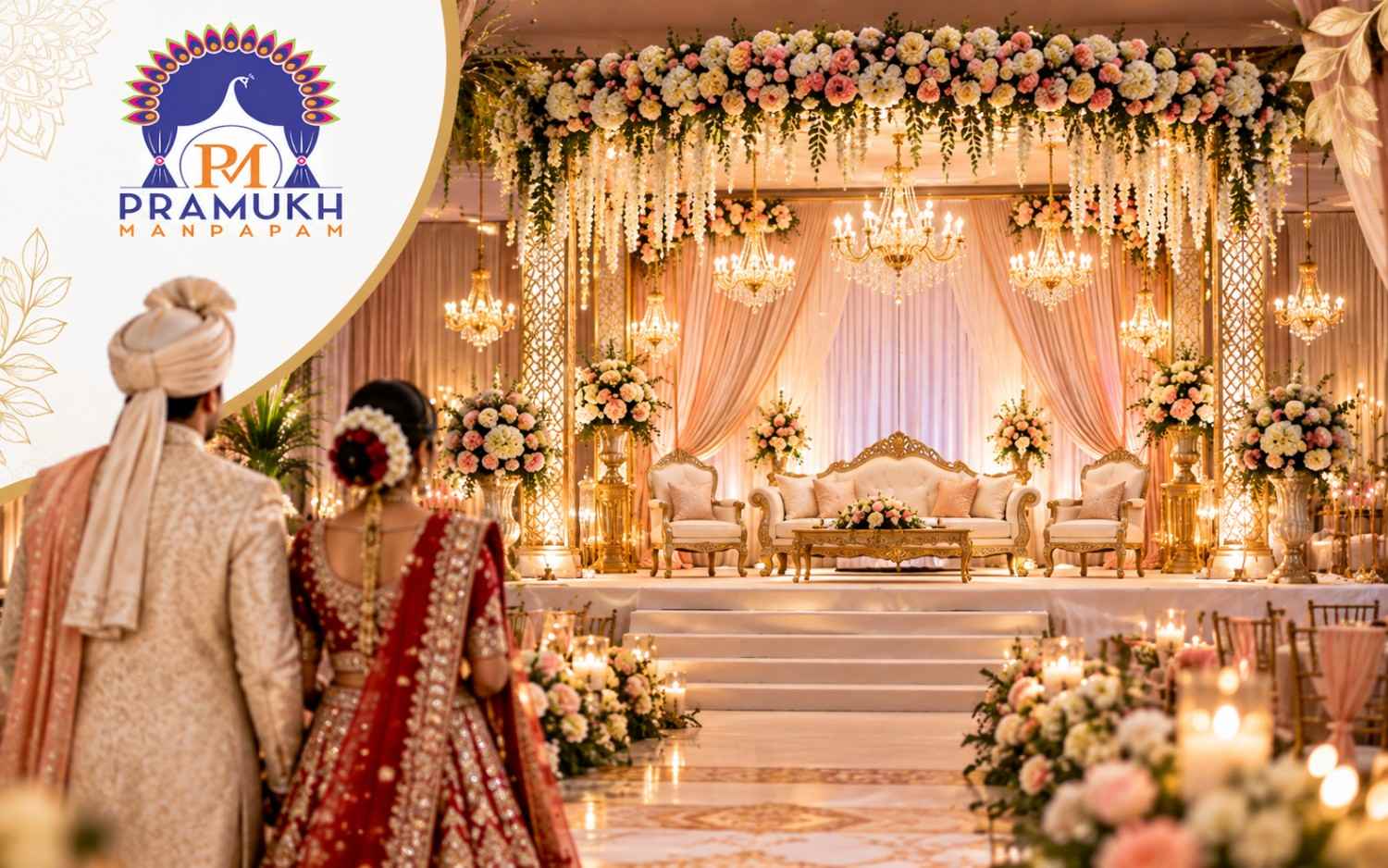
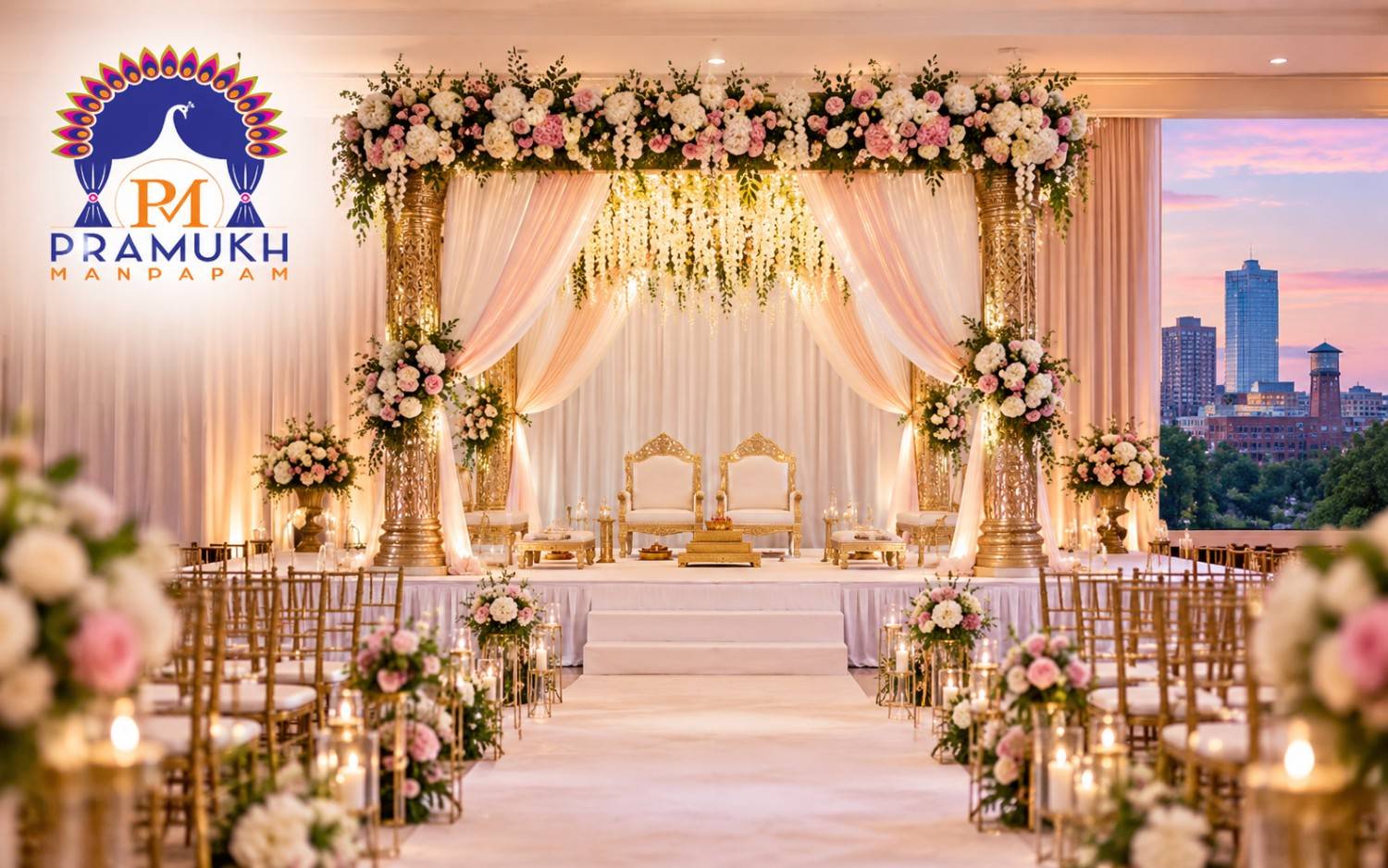
Your reception stage will probably appear in more wedding photographs than any other décor element.
Yet many couples choose a decorator based on a beautiful Instagram image, only to discover later that the same design does not suit their venue, lighting, guest count, clothing, or photography style.
That is the real challenge with indian wedding reception stage decoration.
In 2026, Indian wedding décor is moving toward more personalised, architectural and experience-led designs rather than simply adding more flowers or heavier decoration.
Current décor coverage highlights sculptural installations, geometric frames, textured backdrops, warm lighting and personalised visual concepts among the emerging directions.
So how do you know which decorator is right for your wedding?
Start With Your Reception, Not the Decorator
Before contacting decorators, define what the reception needs to accomplish.
Ask yourself:
- Is the reception indoors or outdoors?
- How large is the stage area?
- How many people will sit on stage?
- Will there be speeches, performances or presentations?
- Do you want a traditional, contemporary or fusion aesthetic?
- Will the stage be used primarily for portraits and family photographs?
- Does the venue already have chandeliers, walls, screens or architectural features you want to retain?
- What colours will you and your family wear?
These details affect the design considerably.
A dramatic floral wall may look impressive in a large ballroom but overwhelm a smaller venue.
Likewise, a minimalist stage can feel elegant in an architectural space but underwhelming if the venue has a very large, empty stage.
The right decorator should respond to your venue and requirements rather than simply show you a catalogue and ask you to select a design.
Look Beyond the Portfolio
A portfolio is useful, but it can also be misleading.
A decorator may show ten spectacular reception stages, but that does not automatically mean they can create the right one for you.
Look carefully at the portfolio and ask:
Are the designs actually different?
If every stage uses the same floral wall, sofa and circular arch with different flowers, you may be looking at variations of one template rather than genuine design capability.
A strong decorator should be comfortable working across different visual languages, from heritage-inspired Indian décor to contemporary minimalism.
Are there complete venue photographs?
Close-up photographs can hide important details.
Ask to see photographs from the back of the room, side angles and wider venue shots. You want to understand how the stage interacts with the entire reception rather than how one section looks in a carefully selected photograph.
Can they show real installations?
Inspiration images and concept renders are not the same as executed work.
Ask whether the portfolio represents the decorator’s own installations and whether they can show examples from venues similar to yours.
Choose a Decorator Who Understands Scale
One of the easiest ways to make a reception stage look wrong is to ignore scale.
A backdrop that looks luxurious in a photograph may appear visually insignificant inside a large ballroom. Conversely, an oversized structure can make a smaller venue feel crowded.
Your decorator should assess:
- Stage width and height
- Ceiling height
- Guest viewing distance
- Couple’s seating arrangement
- Camera positions
- Walkways
- Entrance and exit routes
- Existing venue architecture
- Lighting positions
- Screen or AV requirements
Current stage-design guidance increasingly treats the backdrop as an architectural element rather than simply a decorated wall. Geometric frames, layered structures and three-dimensional installations are examples of this shift.
That means proportions matter just as much as flowers.
Ask How They Design for Photography
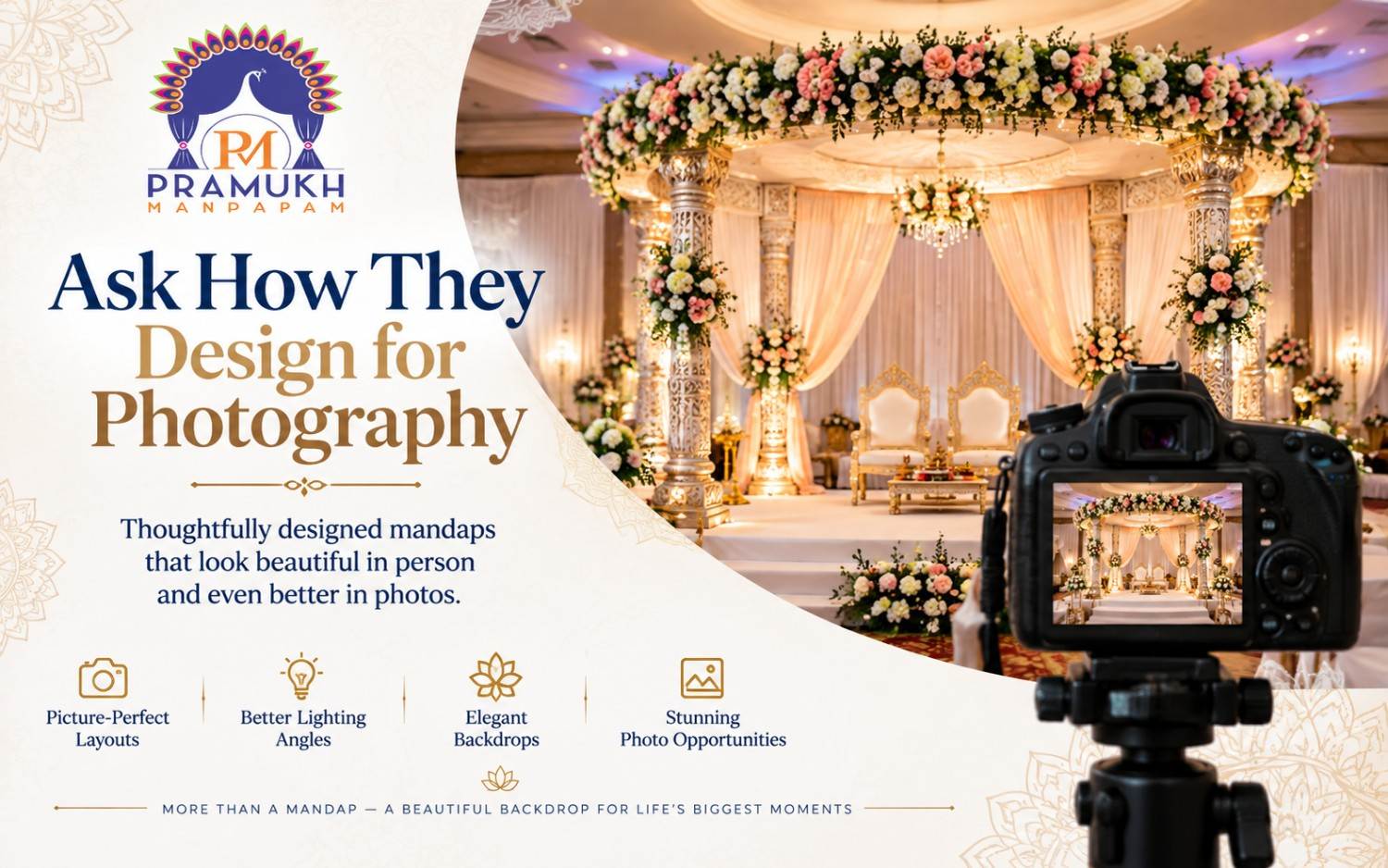
A beautiful stage and a beautiful photograph are not always the same thing.
Your decorator should understand how the stage will appear under professional photography and videography.
For example, excessive reflective surfaces can create unwanted glare. Extremely busy floral arrangements can compete with the couple. Poorly positioned lighting can create harsh shadows or change the appearance of clothing.
Lighting deserves particular attention. Wedding décor specialists are increasingly favouring warmer, softer lighting rather than relying entirely on harsh LED effects, particularly when the goal is flattering photography.
Ask your decorator:
“Can you show me how this design will photograph from the main camera positions?”
That simple question can reveal how deeply they understand stage design.
Evaluate Their Floral Knowledge
Flowers are often the visual language of a reception stage, but more flowers do not necessarily mean better design.
A skilled decorator should be able to explain why particular flowers, colours and arrangements suit your concept.
For example, a stage might use:
- White and green flowers for a refined contemporary look
- Marigolds for a stronger traditional Indian character
- Roses and orchids for a formal luxury aesthetic
- Dried elements for texture
- Cascading arrangements for movement
- Selective floral clusters instead of a completely covered backdrop
The current movement toward sculptural and textural floral installations shows how reception décor is becoming more design-led.
Flowers are increasingly being treated as part of the structure rather than simply filling every available space.
Evaluate Their Floral Knowledge
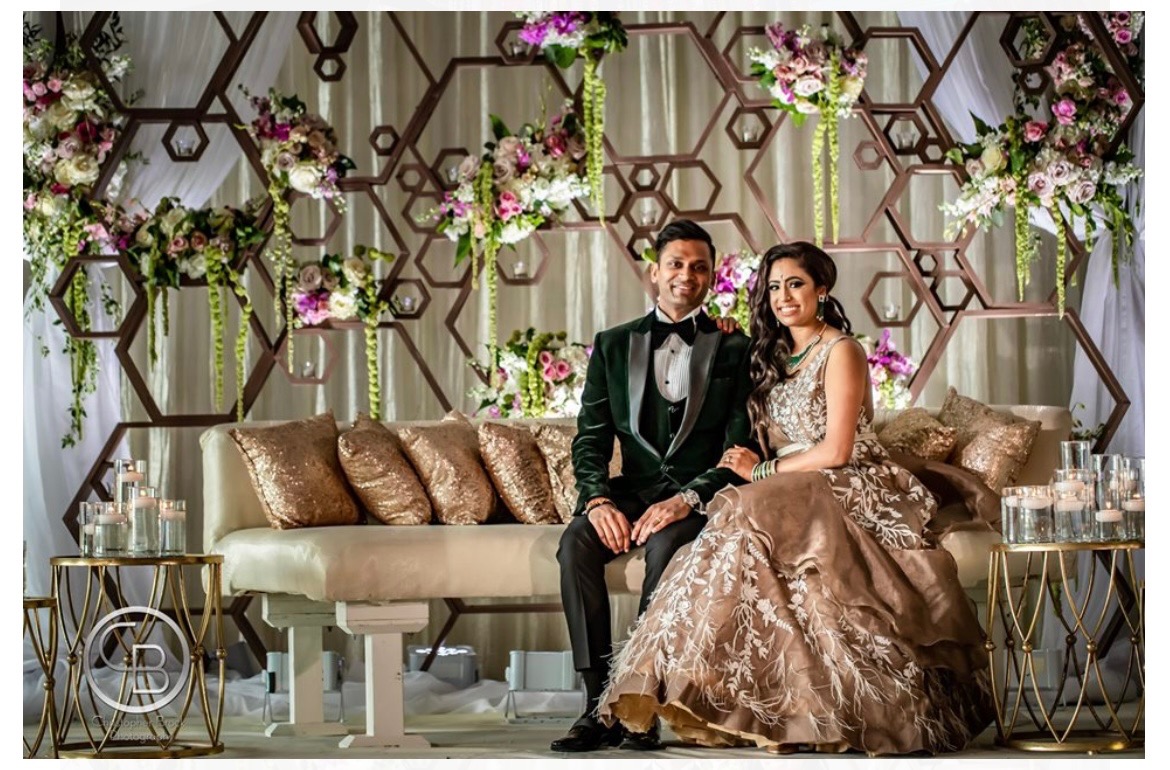
Flowers are often the visual language of a reception stage, but more flowers do not necessarily mean better design.
A skilled decorator should be able to explain why particular flowers, colours and arrangements suit your concept.
For example, a stage might use:
- White and green flowers for a refined contemporary look
- Marigolds for a stronger traditional Indian character
- Roses and orchids for a formal luxury aesthetic
- Dried elements for texture
- Cascading arrangements for movement
- Selective floral clusters instead of a completely covered backdrop
The current movement toward sculptural and textural floral installations shows how reception décor is becoming more design-led.
Flowers are increasingly being treated as part of the structure rather than simply filling every available space.
Discuss Cultural Details Early
Indian weddings are culturally diverse, so your decorator should understand that décor is not only about aesthetics.
Depending on your wedding traditions, you may want subtle references to:
- Regional craftsmanship
- Traditional patterns
- Brass elements
- Temple-inspired detailing
- Marigold arrangements
- Torans
- Heritage motifs
- Traditional colour symbolism
- Family or cultural influences
The goal is not to turn every stage into a heavily traditional setup. A contemporary reception can still include meaningful cultural details.
The best designs make those details feel intentional rather than decorative afterthoughts.
Ask What Is Included in the Quote
Never compare decorators using the total price alone.
Two quotes may look completely different because they include different components.
Ask whether your quotation covers:
- Backdrop structure
- Flowers
- Draping
- Furniture
- Stage platform
- Lighting
- Signage
- Installation
- Dismantling
- Transportation
- Labour
- Venue coordination
- Required electrical work
- Changes or additions
This is particularly important with elaborate indian wedding reception stage decoration, where structural elements, florals, lighting and installation can all form separate parts of the final design.
A lower initial quote is not necessarily cheaper if essential components are added later.
Ask About Venue Coordination
Your decorator is not working in isolation.
The stage may need to coordinate with your:
- Wedding planner
- Venue manager
- Photographer
- Videographer
- DJ or AV team
- Lighting team
- Caterer
- Entertainment team
This becomes especially important when the reception includes speeches, performances or LED screens.
A decorator who asks about the venue’s restrictions, installation timings, ceiling suspension rules and electrical requirements before finalising the design is demonstrating practical experience.
Ask About Venue Coordination
Your decorator is not working in isolation.
The stage may need to coordinate with your:
- Wedding planner
- Venue manager
- Photographer
- Videographer
- DJ or AV team
- Lighting team
- Caterer
- Entertainment team
This becomes especially important when the reception includes speeches, performances or LED screens.
A decorator who asks about the venue’s restrictions, installation timings, ceiling suspension rules and electrical requirements before finalising the design is demonstrating practical experience.
Pay Attention to Communication
Your decorator does not need to agree with every idea you have.
In fact, a good decorator should sometimes challenge an idea if it will create a practical or visual problem.
The important question is whether they explain why.
Look for someone who:
- Listens carefully
- Asks specific questions
- Explains design decisions
- Provides clear quotations
- Responds consistently
- Documents agreed details
- Understands deadlines
- Communicates with other vendors when required
Good communication becomes particularly valuable during the final weeks when several wedding suppliers are working simultaneously.
Don't Choose a Design Before Checking the Venue
Pinterest and Instagram can help you discover your aesthetic, but they should not become your design brief.
Save images that communicate what you like, then show them to your decorator.
This gives your decorator room to adapt the concept to your venue.
A strong designer should be able to interpret inspiration rather than copy it.
Questions to Ask Before Booking
Before signing an agreement, ask these practical questions:
- Have you decorated a venue similar to ours?
- Can we see photographs of your completed reception stages?
- Who will be supervising installation on the wedding day?
- What exactly is included in the quotation?
- Which flowers are included?
- Are the flowers fresh, artificial or a combination?
- How will the design be adjusted if the venue changes?
- What lighting is included?
- When will installation begin?
- What happens if the venue restricts installation time?
- Can the design be modified after the initial concept?
- Are transportation, labour and dismantling included?
- Will you coordinate with our photographer and AV team?
- What is the payment and cancellation policy?
Do not hesitate to ask for everything in writing.
Red Flags That Should Make You Pause
Sometimes the wrong decorator reveals themselves before you sign.
Be cautious if someone:
- Cannot explain what their quote includes
- Uses only inspiration images rather than completed work
- Refuses to discuss the venue before quoting
- Promises an identical result without seeing the space
- Has unclear payment terms
- Changes prices without documentation
- Dismisses your photography requirements
- Cannot explain installation logistics
- Pushes you toward a design that does not suit your venue
Beautiful décor requires creative skill, but wedding décor also requires logistics.
You need both.
The Best Decorator Is Not Necessarily the Most Expensive
A higher budget can provide access to more elaborate materials, larger floral installations, or complex structures. But price alone does not determine design quality.
The better question is:
What does this decorator do with the space, budget and brief I have?
A thoughtful stage with carefully controlled florals, strong proportions, and excellent lighting can feel more sophisticated than an expensive design where every surface is covered.
The 2026 movement toward elevated minimalism and more intentional design reflects this broader shift. Couples are increasingly looking for décor that feels personal rather than simply large.
FAQs
For a popular wedding date or a complex custom installation, earlier planning gives you more flexibility. Ideally, start discussions once your reception venue and date are confirmed so the decorator can design around the actual space.
Start with scale, backdrop structure, seating, lighting and photography. Flowers and decorative details should support those fundamentals rather than compensate for poor proportions.
Not necessarily. The two spaces can share colours, floral language or cultural details without looking identical. A reception can have its own personality while still feeling connected to the wider wedding.
No. Depending on the venue and aesthetic, draping, architectural frames, textured fabrics, lighting, metal structures, greenery or selective floral installations may create a stronger result.
Focus on proportion and visual hierarchy. Choose one strong focal element, allow intentional negative space and use lighting to enhance the structure. Luxury does not require every part of the stage to be decorated.
Set the Stage for an Unforgettable Celebration
Choosing a reception stage decorator is ultimately a design decision and a practical decision at the same time. Look beyond the prettiest portfolio image.
The right professional will not simply reproduce a trending backdrop. They will take your ideas and turn them into a stage that belongs to your wedding.
Pramukh Mandapam specialises in Indian wedding décor with a focus on creating reception environments that feel distinctive, refined and deeply connected to the celebration.
We design and execute Indian wedding reception stage decoration by bringing together thoughtful stage structures, floral styling, draping, lighting, colour palettes and spatial proportions rather than treating each element as a separate decoration.
Our team works around the venue, wedding aesthetic and cultural character of the celebration to develop a stage that looks impressive in the room and translates beautifully through photographs and film.
Pramukh Mandapam can turn that starting point into a considered reception stage concept designed specifically for your celebration.
Explore your décor possibilities with our team and begin planning a reception setting that guests remember long after the final photograph.