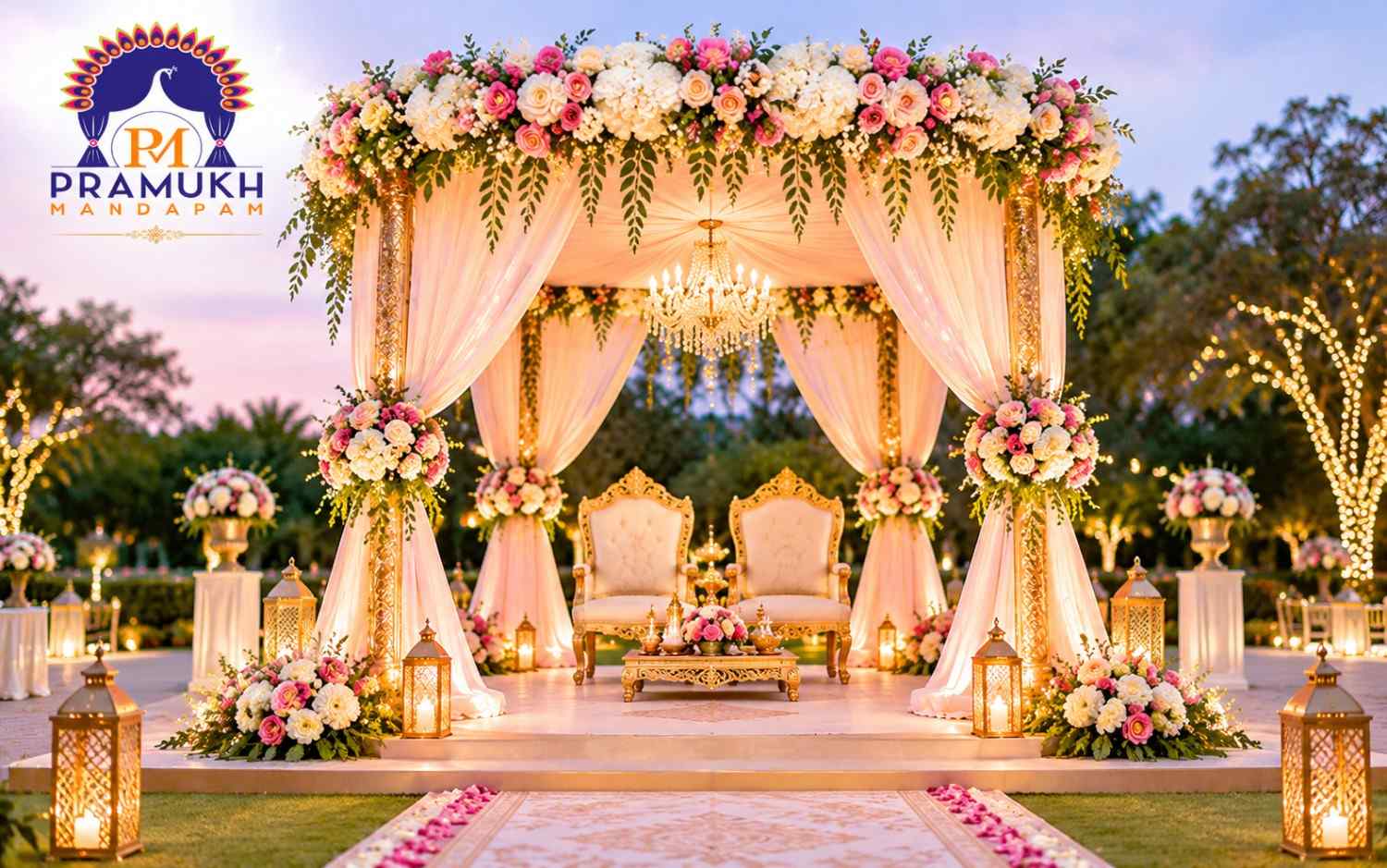
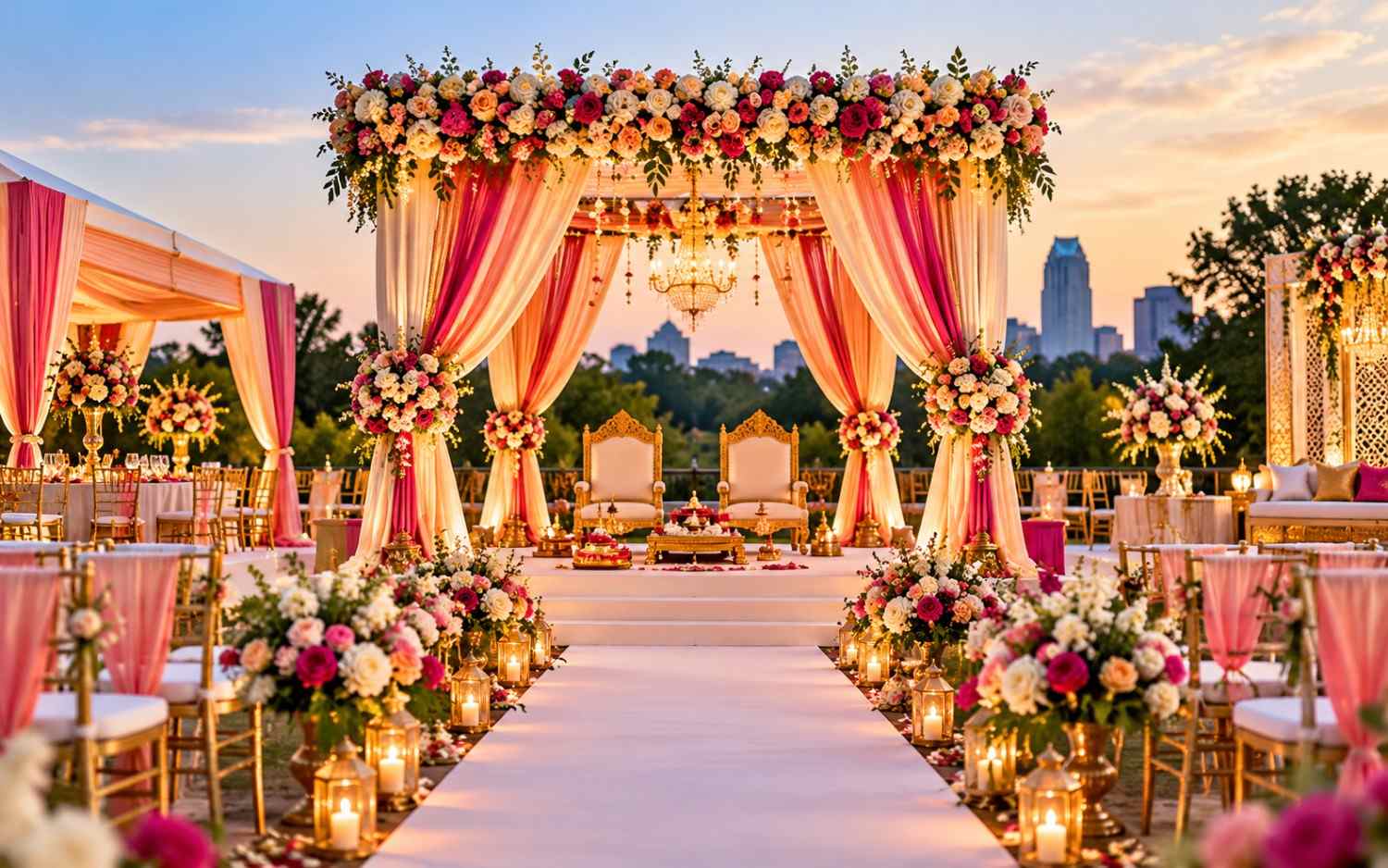
A modern Indian wedding mandap does not need layers of flowers, elaborate pillars or heavy gold detailing to make an impression. Sometimes, a beautifully shaped structure, carefully chosen fabric and a few expressive floral arrangements create a more memorable ceremony setting.
The most successful Indian wedding mandap decoration begins with its structure.
Once the architectural form is established, flowers, draping, lighting and cultural details can work together to create a cohesive design.
Here are modern mandap decoration ideas that move beyond conventional styling and show how to create a ceremony space with character.
1. Architectural Mandaps With Clean, Sculptural Lines
One of the strongest directions in contemporary mandap design is a shift from decoration-heavy structures to architectural forms.
Instead of hiding the frame beneath dense flowers and fabric, the structure becomes part of the visual design.
Consider these approaches:
Curved and layered arches
Rounded arches create a softer alternative to traditional square frames. Multiple arches can be arranged at different depths to create dimension, while a restrained floral installation adds movement.
This design works particularly well when the venue has a modern interior or an attractive outdoor backdrop.
Fluted pillars
Fluted columns introduce texture without requiring elaborate ornamentation. They can be finished in ivory, sandstone, muted gold or a natural stone-inspired shade.
Pair them with a simple canopy and selective floral accents for a polished result.
Geometric metal frames
Slim metallic frames create a contemporary silhouette. Champagne gold, brushed brass and matte finishes can complement neutral flowers and flowing fabrics.
The key is to keep the frame proportionate to the ceremony space. Oversized structures can overwhelm intimate venues, while very delicate frames may disappear in large ballrooms.
The architectural direction is also appearing in recent mandap design coverage, where curved forms, textured panels and cleaner structural lines are replacing excessive surface decoration.
2. Modern Mandap Colour Palettes That Feel Warm, Not Plain
Neutral styling can look beautiful, but a mandap should not feel unfinished or cold. The secret is combining tones with enough contrast to create depth.
Ivory, champagne and soft gold
This combination creates a refined setting with a gentle traditional influence.
Use ivory as the dominant colour, champagne through the fabric or backdrop, and gold in selected structural details. White roses, orchids or jasmine can soften the overall composition.
Sage green, ivory and muted peach
For couples who prefer an organic aesthetic, sage green offers a natural foundation. Add ivory flowers and small touches of peach to introduce warmth.
This palette works particularly well with garden settings, wooden structures and foliage-led designs.
Sandstone, terracotta and antique brass
Earth-inspired colours bring warmth without relying on bright, saturated shades.
Terracotta can appear through selected fabric panels or floral accents, while sandstone finishes and antique brass details create a grounded, contemporary atmosphere.
Dusty blue, lavender and silver
A softer, cooler palette can create an elegant mandap for couples who want something less conventional.
Keep the colours balanced. Too many pastel shades can make the design feel scattered, so choose one dominant tone and use the others selectively.
Design tip: Select the mandap palette alongside the wedding outfits. The couple should stand out against the structure rather than blend into its dominant colours.
3. Use Flowers as Sculptural Features Instead of Covering Every Surface
Flowers remain an essential part of Indian wedding mandap decoration, but modern styling gives them a more deliberate role.
Rather than covering every pillar and canopy edge, use floral arrangements to guide the eye.
Asymmetrical floral clusters
Place a fuller floral arrangement on one side of the mandap and balance it with a smaller arrangement elsewhere.
This creates movement and gives the structure a more editorial appearance.
A single cascading floral feature
A floral cascade from one corner of the canopy can become the main decorative feature.
Orchids, roses and suitable seasonal blooms can create a flowing effect without covering the entire structure.
Monochromatic floral styling
Choose one flower family or a limited range of blooms in similar tones.
An all-white arrangement, for example, can create texture through different flower shapes rather than relying on multiple colours.
Greenery-led mandap decoration
Foliage can create volume and natural texture. Pair it with selected flowers to keep the arrangement visually interesting.
The objective is not to reduce flowers simply for the sake of minimalism. It is to give each arrangement a clear purpose.
Recent 2026 design coverage also highlights sculptural florals, asymmetrical installations and more selective floral placement as alternatives to heavily covered mandaps.
4. Create a Floating Canopy With Fabric and Florals
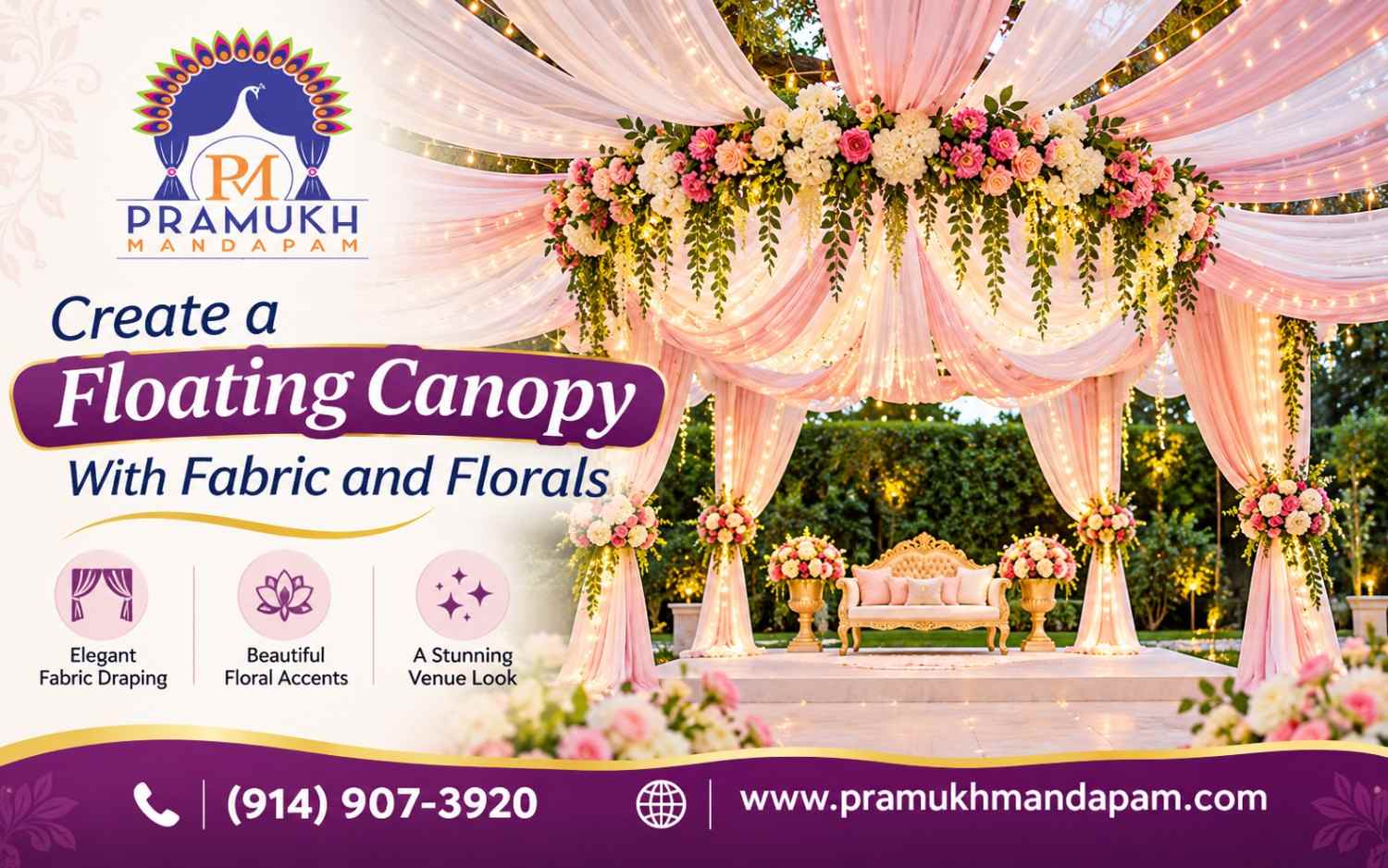
The canopy is one of the most visually important parts of the mandap. It frames the couple and helps establish the ceremony’s atmosphere.
A modern canopy can feel light and expressive without becoming overly elaborate.
Consider:
- Sheer ivory fabric suspended in soft layers
- Organza panels arranged in a gentle canopy
- Mogra strings placed at selected intervals
- Small floral clusters around the canopy edges
- Subtle hanging elements that introduce vertical movement
For a more dramatic design, combine a clean structural frame with a floating floral installation above it.
This approach works especially well in venues with generous ceiling height. In smaller spaces, keep the canopy compact so it does not make the ceremony area feel enclosed.
Any suspended installation should be properly approved, secured and installed according to the venue’s rigging and safety requirements.
5. Bring Traditional Indian Craft Into Contemporary Mandap Design
Modern does not have to mean culturally disconnected.
Indian architecture, textiles and decorative craftsmanship offer many ways to create a mandap that feels contemporary while remaining rooted in tradition.
Jali-inspired panels
Traditional jaali patterns can be reinterpreted through clean, geometric screens. Use them as partial backdrops or side panels rather than enclosing the entire structure.
Carved wooden details
A simple wooden mandap can gain character through carefully selected carved elements.
Keep the surrounding decoration restrained so the craftsmanship remains visible.
Brass accents
Brass bells, lamps and decorative vessels can introduce a familiar ceremonial character. Their placement should feel intentional rather than purely ornamental.
Heritage-inspired textiles
Handwoven fabrics, subtle brocade details or traditional motifs can add cultural depth to an otherwise minimal structure.
This is a particularly effective approach for couples who want a modern aesthetic while retaining details connected to family traditions or regional heritage.
6. Use Lighting to Shape the Mandap's Atmosphere
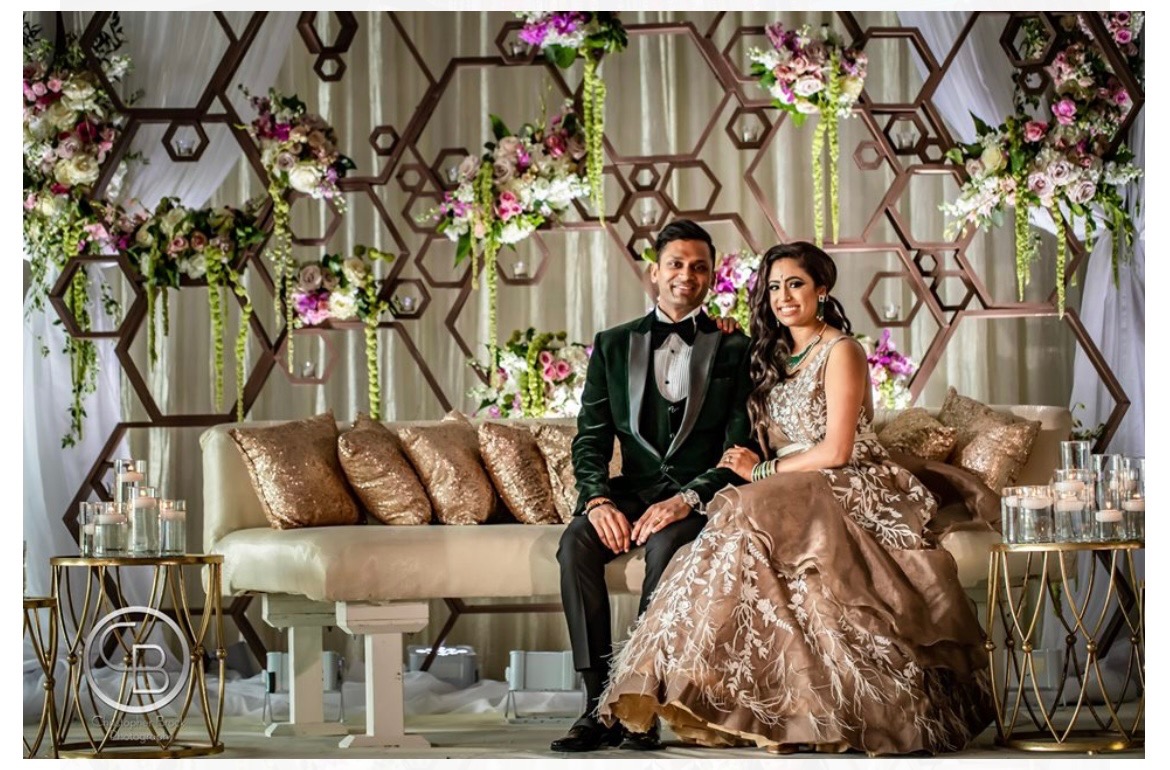
Lighting should be considered during the design stage, not added as a final finishing touch.
The right lighting can make a simple mandap feel intimate, highlight architectural details and improve the visual balance of the ceremony space.
Warm architectural uplighting
Position warm lighting to highlight pillars, arches or textured panels. It creates depth without requiring additional decorative elements.
Hidden LED detailing
Concealed LED strips can trace selected architectural lines or create a subtle glow beneath a canopy. Avoid overly bright or exposed lighting that competes with the flowers and fabric.
Soft pendant lighting
A carefully selected pendant or chandelier can become a focal feature above the mandap. Make sure its scale suits the structure and does not interfere with the ceremony or photography.
Candle-inspired ambience
Where venue rules permit, use enclosed candles or suitable flameless alternatives to create a softer atmosphere around the ceremony area. Lighting should flatter the couple, preserve the visibility of rituals and work with the photographer’s requirements.
7. Try a Transparent or Open-Frame Mandap
Not every mandap needs a solid backdrop.
Open-frame and transparent designs can create a lighter appearance, especially when the venue already has an attractive architectural or natural setting.
Acrylic details, glass-inspired finishes and slim structural frames can give the mandap a contemporary character.
However, transparency needs careful styling. If every element is visually exposed, the rear of the structure, cables, equipment and surrounding venue details may become noticeable in photographs.
To make this design work:
- Keep the structure visually balanced from all sides.
- Use selective florals to frame the couple.
- Coordinate the floor finish with the structure.
- Check reflections and glare under venue lighting.
- Keep visible technical equipment out of key photography angles.
An open mandap is especially effective when the surrounding space contributes to the design rather than competing with it.
8. Design a Mandap That Looks Beautiful From Every Angle
A mandap is not viewed from one fixed position. Guests see it from their seats, family members gather around it, and photographers capture it from multiple directions.
This makes the layout just as important as the decoration.
A traditional front-facing backdrop may work in some venues, but a central or open mandap needs more complete styling.
Before finalizing the design, review:
- The main entrance view
- The guest seating perspective
- The couple’s portrait angle
- The photographer’s wide-shot position
- The priest’s working area
- Family movement around the ceremony
- The view from the sides and rear
A 360-degree mandap can create a more immersive ceremony experience, but it requires thoughtful planning because there is no hidden back side.
Recent wedding coverage has highlighted this format as an emerging direction in ceremony design.
9. Match the Mandap to the Venue Architecture
A design that looks beautiful in a photograph may not suit every venue.
The mandap should respond to the room’s proportions, natural surroundings and existing architectural features.
For a modern ballroom
Choose structured arches, textured pillars, layered lighting and a controlled floral palette. A taller installation can help establish a focal point in a large room, provided the ceiling height and venue rules allow it.
For a garden ceremony
Use natural materials, foliage, soft fabrics and open structures. Let the landscape contribute to the visual setting rather than covering it with unnecessary backdrops.
For a heritage venue
Look for opportunities to complement the existing architecture. Carved details, brass accents, traditional textiles and warm floral tones can connect the mandap to its surroundings.
For an intimate indoor ceremony
A compact arch, a restrained floral canopy and soft lighting can create a beautiful focal point without taking over the room. The best design does not compete with the venue. It makes the venue feel more complete.
10. Make the Design More Sustainable Through Thoughtful Reuse
A refined mandap does not need to depend on excessive single-use decoration.
Consider how selected elements can serve more than one purpose during the wedding.
For example:
- Reposition suitable mandap flowers for the reception.
- Reuse structural frames with a different fabric treatment.
- Incorporate potted plants where practical.
- Choose reusable decorative vessels and metal details.
- Plan floral quantities around the actual design rather than filling every available space.
Floral reuse requires planning around flower condition, installation time and the transition between events. Not every arrangement can be moved without additional labour or damage.
Discuss these possibilities with the décor team before finalizing the design.
How to Combine Modern Mandap Ideas Without Overdesigning
A common design problem is trying to include every attractive idea in one structure.
You may love curved arches, hanging flowers, brass lamps, textured pillars, sheer drapes and a statement chandelier. But using all of them together can make the mandap feel visually crowded.
Instead, build the design around one main idea.
A useful approach is:
- Choose the architectural feature. Decide whether the mandap will be defined by arches, pillars, an open frame or a canopy.
- Select the colour story. Limit the palette to a few complementary tones.
- Decide the floral role. Choose whether flowers will frame the structure, create a focal cascade or form the canopy.
- Introduce cultural details. Include meaningful elements through craft, textiles, lamps or traditional motifs.
- Plan the lighting. Highlight the structure and create the right atmosphere for the ceremony.
- Review the complete composition. Check proportions, ritual requirements, guest visibility and photography angles before approving the final design.
This gives every design element a reason to be there.
FAQ's About Modern Indian Wedding Mandap Decoration
Modern mandap decoration often uses clean architectural structures, restrained floral arrangements, thoughtful colour palettes, layered textures and integrated lighting. Traditional details can still be included through textiles, brass elements and heritage-inspired patterns.
Ivory, champagne, sage green, muted peach, terracotta, dusty blue and lavender are useful contemporary colour options. The best combination depends on the venue, wedding outfits, flowers and overall celebration theme.
Yes. The four-pillar structure can be styled with fluted columns, geometric details, minimal floral clusters, contemporary fabrics and warm lighting. The traditional format does not need to change for the overall appearance to feel modern.
Yes. Floral arrangements can be concentrated around the canopy, pillars or selected structural details. The design should still provide the visual presence and ceremonial setting the couple wants.
A traditional mandap commonly uses four supporting pillars and a defined canopy. An open mandap may use arches, suspended elements or a less enclosed structure to create clearer sightlines and a more connected relationship with the surrounding venue.
Focus on structure, proportion, material finishes and lighting. Textured pillars, quality draping, carefully positioned floral arrangements, and a cohesive colour palette can create visual richness without covering every surface.
They do not need to look identical, but a shared design language can create continuity across the wedding. You can carry the same colour palette, floral style or material finish into the reception while giving each space its own identity.
Bring Your Modern Mandap Vision to Life With Pramukh Mandapam
Modern Indian wedding mandap decoration is not about leaving tradition behind. It is about interpreting it through thoughtful design.
Architectural frames, sculptural flowers, soft colour palettes, contemporary textiles and carefully planned lighting can transform the ceremony setting while keeping its cultural significance at the centre.
The strongest mandap designs are not necessarily the most elaborate. They are the ones where the structure, flowers, materials and lighting feel as though they belong together.
At Pramukh Mandapam, we bring together the ceremonial beauty of Indian weddings and the possibilities of contemporary décor. We design Indian wedding mandaps by considering the structure, floral composition, draping, lighting, venue architecture and practical requirements of the ceremony as one connected concept.
Whether your inspiration is an architectural arch, a softly layered floral canopy, a minimal ivory setting or a modern interpretation of traditional Indian craftsmanship, our team works to shape those ideas into a cohesive mandap design.
Share your inspiration, your cultural preferences and the atmosphere you want your ceremony to create.
Let Pramukh Mandapam turn those details into a mandap that feels yours, where modern design meets the meaning of the wedding ceremony.