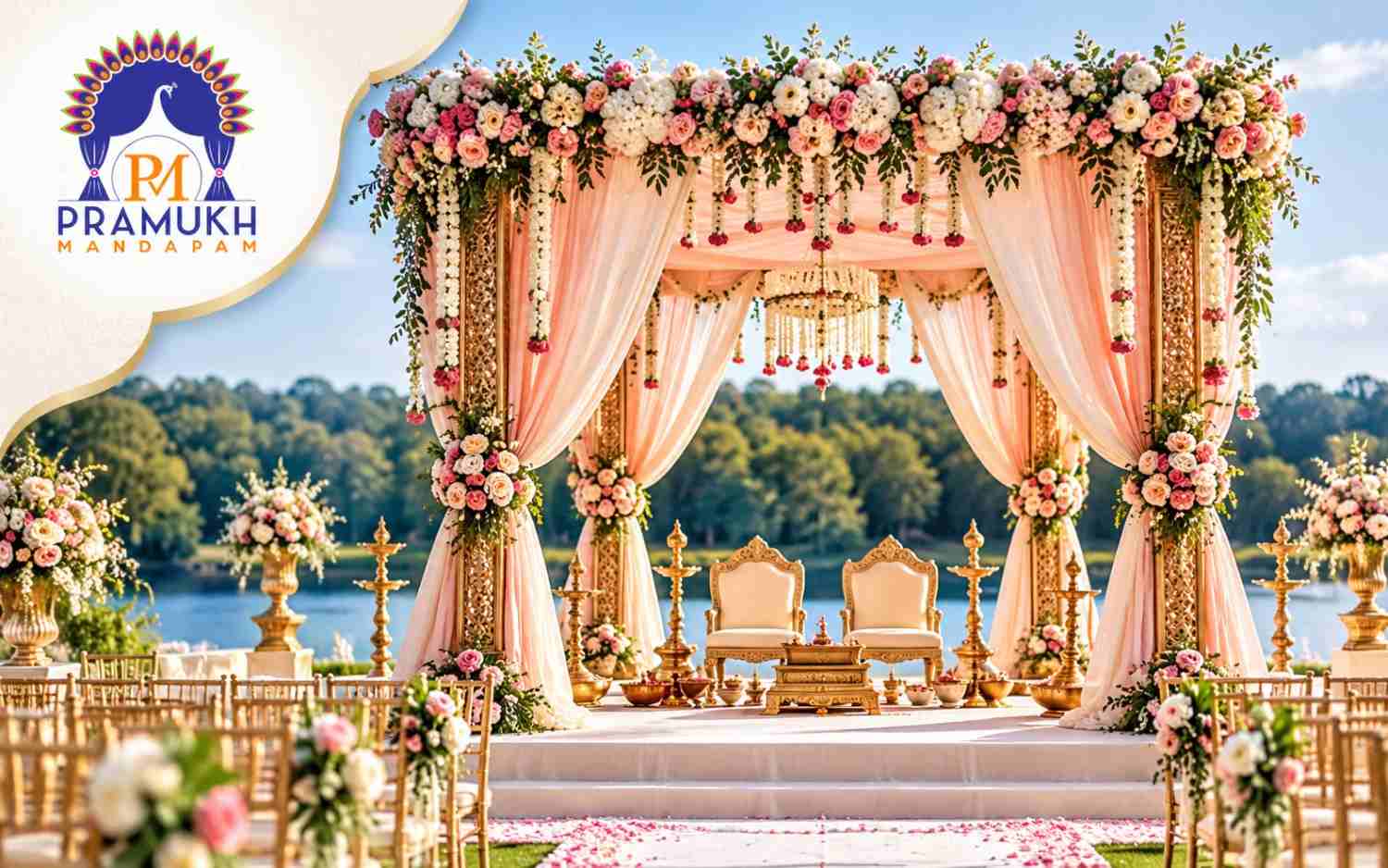
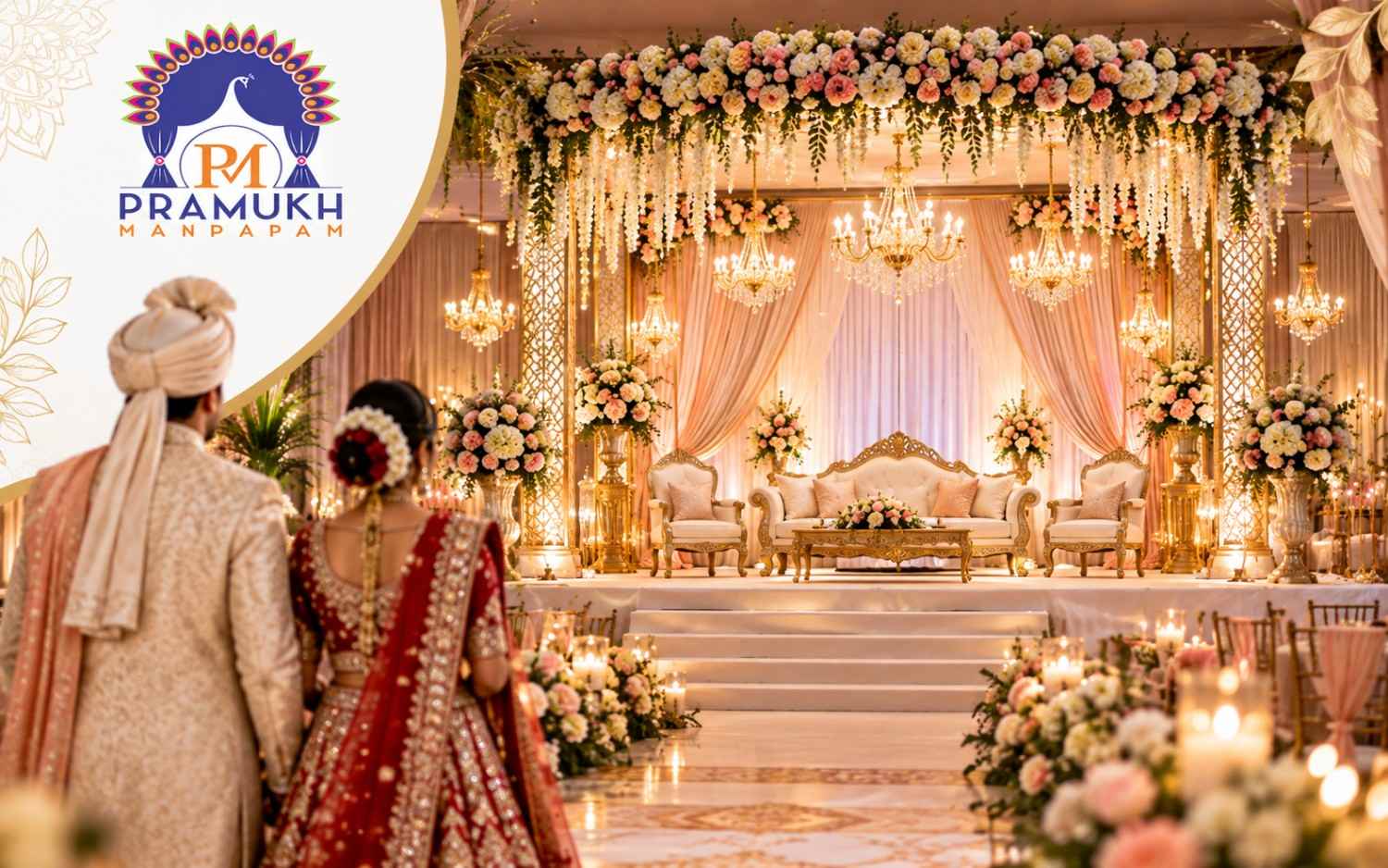
The mandap is not simply the prettiest structure at an Indian wedding. It is where the most meaningful part of the celebration happens. Vows are exchanged, sacred rituals take place, families gather close, and countless photographs are captured around the same space.
That makes choosing a decoration mandap indian wedding more complicated than selecting a colour palette from Pinterest.
A mandap that looks spectacular in a photograph may not work inside your North Carolina venue. Ceiling height, natural light, weather, fire regulations, guest seating, photography angles, and the scale of the room can completely change how a design feels.
The right approach is to design the mandap around the ceremony first, venue second, and visual style third.
Once those three pieces work together, the flowers, fabrics, lighting, and decorative details become much easier to choose.
Start With the Venue, Not Pinterest
Before choosing a mandap style, study the space where it will actually be built.
North Carolina weddings can take place in everything from hotel ballrooms and country clubs to botanical gardens, estates, and outdoor venues. Each setting creates different design opportunities and restrictions.
For example, an outdoor garden can naturally provide greenery and depth, while a ballroom may need a stronger architectural structure to create a defined ceremony area.
Your decorator should assess:
- Ceiling height and available floor space
- Indoor and outdoor options
- Natural light throughout the ceremony
- Existing chandeliers or architectural features
- Guest seating and aisle width
- Photography and videography positions
- Electrical access
- Installation and dismantling restrictions
- Weather contingency plans for outdoor ceremonies
Venue policies can also vary considerably around outside catering, havan, baraat and ceremony requirements, so these details should be confirmed before finalising the mandap design.
The goal is not to force your favourite design into the venue. It is to find a design that looks as though it belongs there.
Decide What You Want the Mandap to Feel Like
Instead of beginning with individual flowers, define the atmosphere.
Do you want the mandap to feel:
- Regal and traditional?
- Contemporary and architectural?
- Romantic and floral?
- Earthy and organic?
- Minimal and sophisticated?
- Temple-inspired?
- Garden-like and immersive?
This distinction matters because two mandaps can use the same flowers and still feel completely different.
For example, ivory roses combined with sheer fabric and warm lighting can create a soft contemporary atmosphere. The same flowers arranged densely around carved pillars can feel much more traditional.
Current Indian wedding décor is increasingly moving toward personalised design, with couples choosing intentional compositions rather than simply maximising the amount of decoration.
Choose the Mandap Structure Before Choosing the Flowers
One of the most overlooked decisions is the structure itself.
The flowers may be what catches your eye first, but the structure determines the mandap’s proportions, silhouette and presence.
1. Architectural Mandaps
Clean frames, geometric arches and structured pillars work particularly well in contemporary venues.
The structure becomes part of the visual identity instead of simply supporting flowers.
2. Traditional Four-Pillar Mandaps
A four-pillar format offers a familiar ceremonial silhouette and can be adapted with carved details, fabrics, florals and traditional motifs.
It is especially suitable when cultural references are central to your wedding aesthetic.
3. Draped Mandaps
Layered fabrics can soften a venue and create movement around the ceremony.
Sheer drapes are particularly effective when you want an intimate atmosphere without completely blocking the architecture behind the mandap.
4. Garden-Inspired Mandaps
For outdoor North Carolina weddings, greenery and natural textures can allow the mandap to feel integrated with the surroundings rather than placed on top of them.
5. Sculptural Mandaps
Current décor trends are moving toward mandaps that behave more like architectural installations, using asymmetrical forms, layered arches and carefully positioned florals.
The important point is that the structure should support the ceremony and the venue, not simply follow a trend.
Build Your Colour Palette Around More Than Flowers
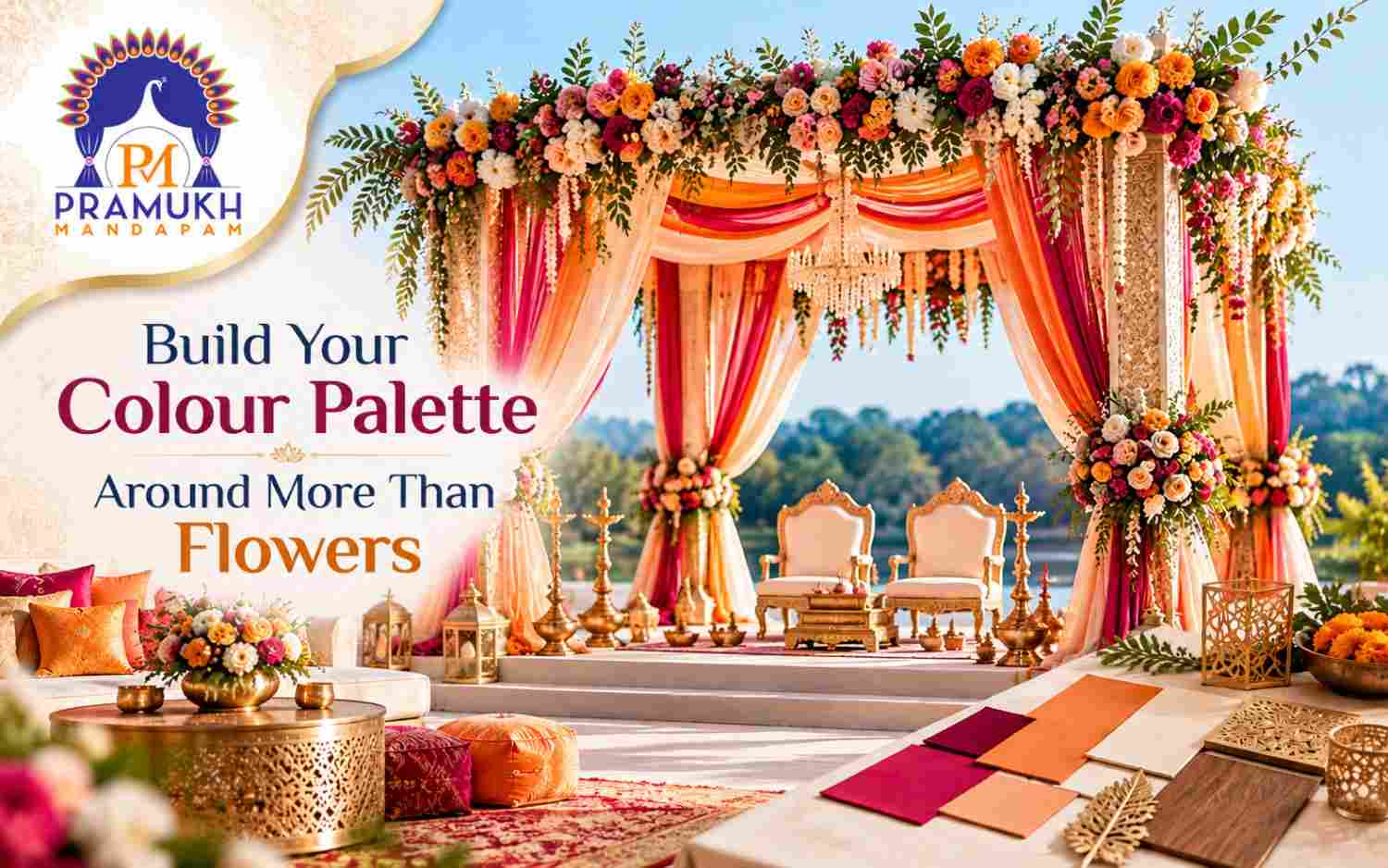
Red and gold will always have a place in Indian weddings, but they are no longer the only route to a rich ceremonial setting.
Current 2026 décor trends include combinations such as:
- Ivory and champagne
- Sage and ivory
- Terracotta and muted peach
- Lavender and powder blue
- Forest green and warm brown
- Blush and cream
- Deep jewel tones with metallic accents
Think about your wedding clothing as well.
Your mandap should complement the bride’s lehenga or saree and the groom’s attire without disappearing into it.
If your outfit is heavily embroidered, a calmer backdrop may create better visual balance. If your clothing is relatively understated, the mandap can carry more visual drama.
Let Flowers Frame the Ritual
A common mistake is treating flowers as the main event.
They should frame the ceremony rather than hide it.
Your floral design should reinforce that visual journey.
Instead of covering every pillar completely, consider:
- One dramatic floral cascade
- Floral clusters at the corners
- Hanging arrangements
- A concentrated canopy
- Asymmetrical floral placement
- Greenery woven through the structure
- Mono-floral arrangements for a cleaner aesthetic
The shift toward sculptural florals is particularly noticeable in current wedding décor. Flowers are increasingly being treated as structural design elements rather than simply decorative filler.
Think About the Ceremony When Planning the Design
A beautiful mandap still has to function as a ceremonial space.
The priest needs room to conduct rituals. Parents may need to sit or move around the structure. The couple needs comfortable seating. Photographers need access without constantly stepping into the ceremony.
That means your decorator should understand the practical requirements of the rituals being performed.
Before approving the final design, confirm:
- Where the sacred fire will be positioned
- How much working space the priest needs
- Where family members will sit
- Where ritual items will be placed
- How the couple enters and exits
- Where photographers can stand
- Whether the structure affects sightlines for guests
A recent industry guide similarly recommends treating the mandap as both a ceremonial environment and a design element, with particular attention to ritual access, seating and photography sightlines.
North Carolina Weather Should Influence Outdoor Mandap Design
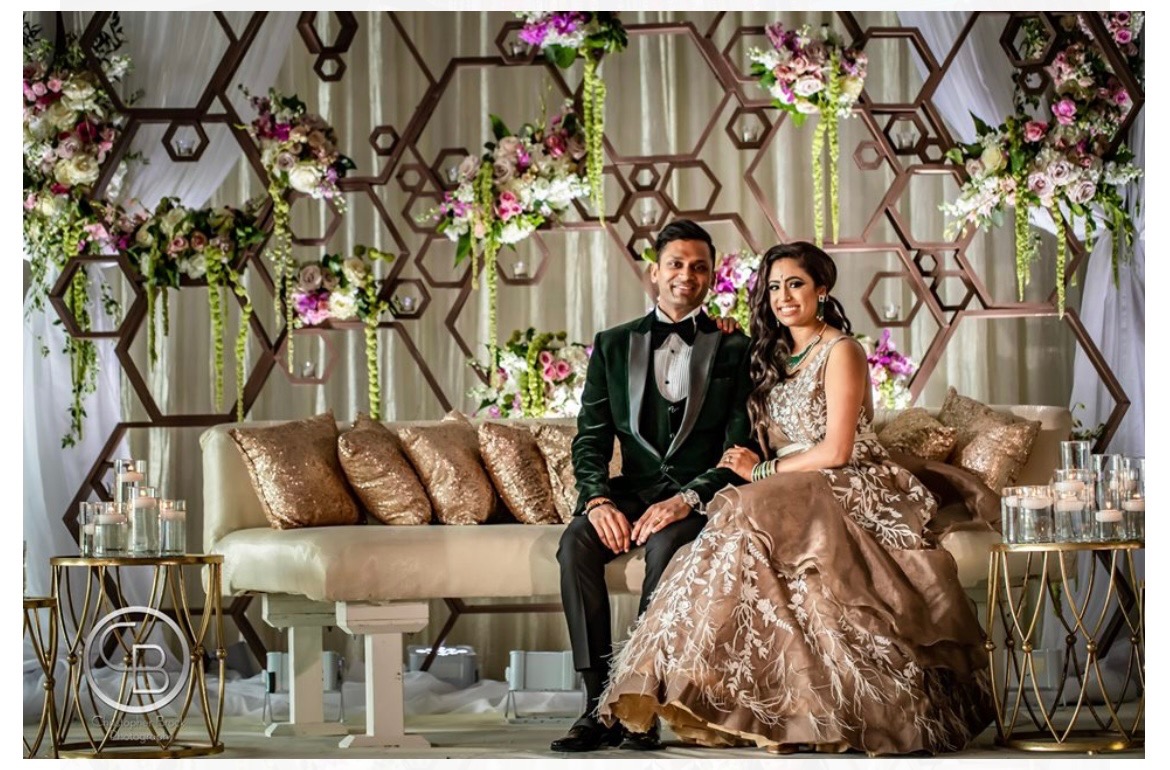
Planning an outdoor mandap in North Carolina requires more than choosing a beautiful garden.
Weather can affect flowers, fabrics, structures, candles, electrical equipment and guest comfort.
If your ceremony is outdoors, discuss:
- Wind exposure
- Rain contingency
- Sun direction
- Humidity
- Ground conditions
- Structural anchoring
- Fabric movement
- Floral durability
- Backup indoor space
A beautiful lightweight fabric installation may behave very differently in an exposed outdoor location than it does inside a ballroom.
Your decorator should be able to explain how the design will be adapted to the actual site rather than simply reproducing an indoor concept outdoors.
Design for the Camera, Not Just the Guest
Your mandap will likely become one of the most photographed areas of the wedding.
That means photography should influence the design from the beginning.
Ask your decorator to consider:
Background
Avoid visual clutter directly behind the couple.
Depth
Layered structures, draping and floral placement can create depth instead of making the mandap appear flat.
Light
Warm, controlled lighting can create atmosphere while avoiding harsh shadows and glare.
Sightlines
The mandap should remain visually strong from the aisle, guest seating and photographer positions.
Negative Space
Empty space is not wasted space. It can help the couple remain the visual focus.
Warm, low-glare lighting is becoming increasingly important in wedding décor because it creates a softer atmosphere and can be more flattering in photographs than aggressive lighting effects.
Add Cultural Details With Intention
Your mandap does not need every traditional element available.
Instead, choose details that have meaning for your family or community.
You might incorporate:
- Marigold garlands
- Brass vessels
- Traditional motifs
- Temple-inspired pillars
- Torans
- Regional textile patterns
- Bells
- Diyas
- Carved details
- Heritage-inspired colours
The strongest contemporary Indian wedding designs often reinterpret tradition rather than reproducing it literally.
That might mean a traditional motif appearing within a modern geometric structure or classic marigolds being arranged through a clean architectural frame.
The result feels culturally recognisable without becoming visually predictable.
Consider Sustainability Without Sacrificing Beauty
Sustainability can also influence your mandap decisions.
Ask your decorator whether structures can be reused and whether floral elements can be repurposed for another part of the celebration.
Some couples are also exploring potted plants, reusable structural elements and reduced single-use materials.
Current wedding décor discussions increasingly connect sustainability with practical sourcing and reuse rather than treating it simply as a theme.
This can be particularly useful when you have multiple wedding events and want design elements to transition from one celebration to another.
Compare Decorators by Their Process, Not Just Their Photos
A strong decorator should ask about your venue dimensions, ceremony requirements, guest count, wedding attire, preferred aesthetic, photography and installation restrictions before finalising the design.
Look for someone who can explain:
- Why the structure suits your venue
- Why particular flowers were selected
- How lighting will be positioned
- How the mandap will work during the rituals
- What happens if weather changes
- Which elements are included in the quotation
- How installation and dismantling will be handled
A beautiful portfolio gets your attention. A thoughtful process earns your confidence.
Don't Let a Trend Choose Your Mandap
The latest mandap trend may look perfect online and completely wrong in your venue.
In 2026, architectural mandaps, elevated minimalism, organic materials and sculptural floral installations are gaining attention.
But trends should be inspiration, not instructions.
If you love a traditional mandap, keep it.
If you want a modern structure with only a few flowers, embrace it.
If your family’s cultural traditions require particular elements, build around them.
The perfect decoration mandap indian wedding concept is not the one that looks most fashionable this year. It is the one that feels appropriate to your ceremony, your venue, and the people celebrating with you.
A Simple Way to Finalise Your Mandap
Before approving your design, make sure you can answer five questions:
- Does it fit the venue?
The proportions should feel natural within the space. - Does it support the ceremony?
Rituals, seating, and movement should remain comfortable. - Does it complement the clothing?
The mandap should enhance the couple rather than compete with them. - Will it photograph beautifully?
Consider depth, lighting, background and camera angles. - Does it feel personal?
There should be something about the design that could belong only to your wedding.
If the answer to all five is yes, you are much closer to the right design.
FAQs
There is no single best style. The right option depends on your venue, ceremony traditions, guest count, weather conditions and aesthetic. Indoor ballrooms may suit architectural or draped structures, while outdoor venues can benefit from designs that incorporate the surrounding landscape.
There is no universal percentage that works for every wedding. The mandap is a major visual and ceremonial feature, so its budget should reflect the importance you place on structure, flowers, lighting and customisation.
Absolutely. Traditional four-pillar forms can be updated with contemporary materials, restrained florals, neutral palettes, sculptural arrangements and modern lighting while retaining the ceremonial character.
The choice depends on season, availability, colour palette and the overall design. Marigolds, roses, orchids, jasmine and greenery can all work, but the arrangement and placement often matter more than simply selecting a particular flower.
Yes. Outdoor ceremonies should have a realistic weather contingency. Discuss rain, wind, sun exposure, structural stability and an alternative ceremony location with your venue and decorator before finalising the design.
Turn Your Mandap Vision Into a Designed Ceremony Space
The perfect mandap is not created by adding the largest floral arrangement or copying the most popular design online. It comes from understanding the space, respecting the ceremony and making every design decision work together.
Choose the structure first. Build the colour story around it. Use flowers to frame the ceremony. Let lighting create atmosphere. Then add personal details that make the mandap unmistakably yours.
Pramukh Mandapam creates Indian wedding mandap décor that brings together ceremonial tradition, contemporary design, and the character of the venue.
We approach each mandap as a complete visual environment, considering its structure, proportions, floral composition, draping, lighting, photography angles, and the practical needs of the ceremony before the final design is built.
Whether your vision is rooted in timeless Indian elegance, modern architectural styling or a thoughtful blend of both, our team develops the décor around your celebration rather than placing a standard design into your venue.
Bring us your inspiration, your traditions or even just the feeling you want your ceremony to create, and let Pramukh Mandapam shape it into a mandap designed specifically for your wedding in North Carolina.